
Presentation Skills Training Results

Presentation Skills Training Results What were the results of presentations skills training? It’s not what you say about your programs and services that count. It’s what your clients say. Do you agree? What have my clients said about their experiences with my training, speaking and coaching programs? Feedback from Presentation Skills Training “I am still benefiting from taking this course in my many executive presentations. Thanks George.” Paula Jadischke, “I first met George in 2006 at the Canadian Management Center where he was facilitating a course entitled “Effective Executive Speaking”. After an intensive three-day course, I left a better, more confident public speaker and I continue to utilize the methods I learned in my career today. George possesses an incredible ability of connecting with people and making them feel comfortable delivering a subject that for many is far from comfortable, public speaking. He identifies your existing communication style and capitalizes on your strengths to make you better while at the same time making you aware of areas of improvement to develop. It was a great experience working with George and I would highly recommend anyone wanting to improve their public speaking or presentation skills to connect with him” Juan Panlilio, “I have had the pleasure of attending several presentations by George over the years, at the Chamber, networking groups and Rotary. He engages the audience, thinks out of the box, and always uses humour to get his points across. If you need to learn how to present, George is the man for the job.” Dean Rutty, Co-Owner/Project Manager, Graphic Ideas “George offers a great workshop on Presentation skills and takes time to understand his clients’ needs. As Senior Training Advisor at Bombardier Aerospace, I hired George for an internal customized senior management program. We received excellent feedback on the sessions.” Carol Ford, “As a professional speaker/trainer, George keeps his audience engaged by ensuring that they actively participate in group discussions and activities. He does his homework, ensuring that his materials are relevant to the audience he is presenting to. We have had the pleasure of having George provide our team with “Power Presentations” training, and resulting from that learning experience, George was once again invited to be a speaker/trainer at several of our client professional development events. I highly recommend George Torok to any organization that is looking for a professional trainer/speaker on marketing, effective presentations, and creative problem solving.” Cristina Dee-Ong “We have contracted the services George offers on multiple occasions. We have found George to be excellent in assisting us in focusing on our message and delivering a knockout presentation. I truly believe George has been very instrumental in us landing some very large projects.” Elliot Kohn “George worked with me, helping me crank my presentation skills up a notch. He provided candid critique and most valuable suggestions. George is a very clear thinker and an excellent observer of people. I really look forward to future sessions with George.” W.F.C. (Rick) Baker “Thanks again for your outstanding presentation on presentation skills at our conference last week! Even though you were speaking to a room filled with seasoned trainers and speakers, you added immensely to their deeper understanding of how to give great presentations. What you shared makes sense, even though many of us have been doing the opposite for years. It was like learning the secrets of success in presenting at a very high level. We look forward to doing more work with you in the future.” Wayne Vanwyck,CEO, The Achievement Centre International Are you ready to learn more about shaping the right presentation skills program for your team? Let’s talk soon. Call me, George Torok at 905-335-1997. If you’re not ready yet, feel free to subscribe to the weekly Superior Presentation Tips at www.TorokTips.com Access More Presentation Skills Resources Looking For A Speech Coach? Learn More Here
How to Open and Close Your Presentation

How to Open And Close Your Presentation with Impact Make the best first and last impression when you speak. What are the three distinct parts of your presentation? They are the opening, body and close. The body is the major part of the presentation The opening and close might only comprise 10 to 15% of the time, yet they are critical because they convey first and last impressions. You’ve probably heard that first impressions are important. Did you know that last impressions are also important? The last impression follows the law of recency. We have selective memory, and we tend to remember firsts and lasts. We also place more importance on firsts and lasts. What does that mean to you as a presenter? Spend more time and effort getting your opening and close right. When creating your opening and close, consider the possibility that the audience might only remember these two parts. If that was true, would they have received your intended message? If not, revise your opening and close. The body is the detail, the opening and close provide the motivation and the direction. Rehearse your opening and close separately so you can deliver them confidently and effectively. If you are using slides, blank the screen while you speak during the opening and closing because you want to be the focal point. You want the audience focused on you during your opening and closing so your message is received, understood and remembered. Don’t allow a slide to interfere with your messages during these key parts of the presentation. What are common mistakes you can avoid in the opening and close? What are effective techniques and specific phrases you can use? When you speak, create and convey the first and last impressions that support your message. How to open your presentation? Your first words are important because your audience is judging you. They are scrolling through questions in their mind: Should I listen? How long will this take? Do I trust the person? How painful will this be? When will we get to the relevant part? What does this mean to me? The purpose of your opening is to grab their attention, establish rapport and set the direction. Most importantly – grab attention. How might you do that? First, be aware of silly phrases to avoid: My name is… and a little bit about me (we don’t care) Today I’m going to talk about (boring) Thank you for inviting me to speak (boring and irrelevant) I’m honored to be invited (wasting time and feeling phony) Instead, start with: An enticing promise A bold statement An intriguing question An emotional trigger Study these suggested phrases for each opening method. An enticing promise: By the end of this presentation, you will understand the 3 criteria for You have the tools for success, and today you will learn how to use them You don’t need to waste more money if you use this process A bold statement: If we don’t address this threat, we will be out of business in six months Success is never easy, yet it can be simple We have a secret weapon that is waiting to be used An intriguing question: Did you know… Would it surprise you to learn… What is the most dangerous question that our clients are asking about… An emotional trigger: Imagine a world where… (The word “imagine” engages and triggers our imagination) How would you feel about… (“feel” is emotional and more powerful than “think” which is logical) What scares you about… (tap into the powerful emotion of fear) My daughter asked me about… (family stimulates emotional connections) Review these opening phrases. Rehearse them out loud. Play with different endings that fit your circumstances. Get comfortable with these opening lines. Imagine the power of your presentation when you grab their attention in the first few seconds with the right words. Close your presentation with purpose. The close to your presentation is important to the success of your message. Your close is the last impression. You can make it the lasting impression that resonates within their minds even after they leave the room. How can you do that? Prepare the precise words that you will end with. Don’t wing your close. There might have been some freeform parts during the body of your presentation. However, words in your close are precious. Chose them purposefully and deliver confidently. Remember this guideline when creating your close. If they only remember the close, will they have the essence of your message? First let’s identify the weak closes that you must discard. That’s all, I’m done now. That’s everything I know. I think that covers it. Oh, looks like my time is up. Thank you* *If you’re wondering why “Thank you” is a poor way to end, read this blog post. Don’t End with Thank You. Instead end proud and strong Consider these options for your close Summary Call to action Challenge Reflect the opening I want to leave you with Summary Briefly mention the top three points. You covered the detail in the presentation. By reminding them of the key points you reinforce these points and relative details. Call to action If the purpose of the presentation was to move people, you remind them in the close. In a good sales presentation, you highlighted the call to action earlier in the presentation. This is simply the final reminder of action required. A phase that works well is “the next steps are”. Challenge This is a variation of the call to action. Challenge them to act, start the process or achieve a goal. Reflect the opening Tie the close to what you said in the opening. You might repeat the opening line. If you opened with a question you might repeat the question or answer it or tell them the answer. This technique conveys closure to the opening dilemma. I want to leave you with,,, This is a warm close that can combine with the other options. I
Why Presentation Skills Training is Best Investment
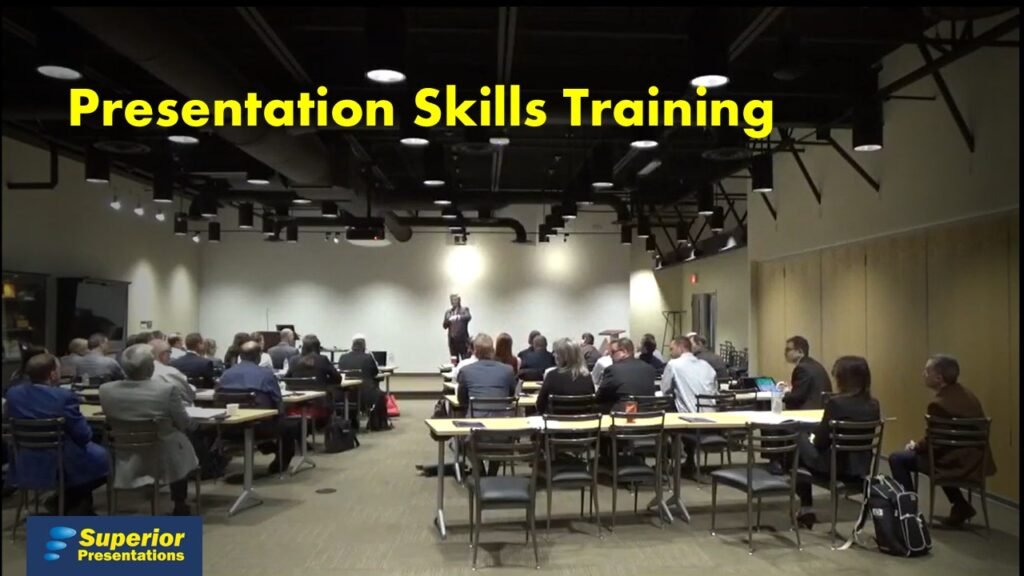
Why Presentation Skills Training Is Best Investment This Year When you think about “presentation skills training,” you might picture someone learning how to gesture correctly or avoid filler words. Naturally, those aspects matter. And here’s the truth that the best leaders already know, presentation skills training is business training. Your ability to speak clearly, persuade confidently, and deliver a message that lands, these are the skills that influence decisions, win clients, lead teams, and advance careers. If you can’t convey your ideas, they won’t matter.If you can’t present your value, others won’t see it.If you can’t communicate with clarity, people fill in the gaps: often incorrectly. From my three decades of coaching leaders and professionals, I’ve learned that presentation skills training isn’t about “performing.” It’s about communicating your value in a way that feels natural and credible. And when you do that, you enjoy amazing results. Why Presentation Skills Matter More Now We live in a world where: Your audience’s attention is shorter than a fruit fly’s patience. Hybrid meetings demand you communicate well both online and in person. Teams crave clarity because confusion costs money. Prospects don’t buy from the smartest person; they buy from the best communicator. Strong presentation skills give you an unfair advantage. Weak skills restrain your progress. What Effective Training Looks Like Effective presentation skills training doesn’t dump formulas on you.It helps you: Structure a message for people to follow Use language that moves people, without clichés Avoid “weed words” that weaken your credibility Speak with confidence even when you feel nervous Read the room and adjust your delivery Deliver online presentations that don’t feel like hostage videos You learn techniques you can use immediately in your next conversation, sales pitch, or team meeting. The Real Benefit: Confidence Through Competence People might say they want to “feel more confident.” What they really want is to know how to convey more confidence to their audience. What are the red flags they need to stop waving and what can they do differently? Confidence is in the perception of the audience. When you understand how to craft a message, when to pause, how to use your voice, and how to connect with an audience, your confidence grows naturally. Not theatrically. Authentically. Imagine that: more confidence because you feel more confident and comfortable with your audience and your message. Who Benefits Most from Presentation Skills Training? My clients who have seen the fastest transformation include: Executives who need to deliver strategic messages Sales teams who must influence under pressure Professionals who want to advance in their career Entrepreneurs pitching investors or customers If you need to communicate with others, presentation skills training is a massive multiplier of your ability to influence others to help you succeed. Where to Begin When you’re ready to elevate the presentation skills of your executive team, explore these training programs. And yes, they can be delivered locally in south-western Ontario, including Toronto, Mississauga, Hamilton, Niagara, Kitchener-Waterloo, London and especially Fergus. I have a soft spot for Fergus. Feel free to ask me about that. You can also arrange for online delivery which is available worldwide. Presentation skills training is not a luxury. It could be the best investment you make for your executive team this year. Next step is a phone or Zoom call to get acquainted and clarify the needs of your executive team. Imagine the results when your team delivers superior presentations every time they speak. Access More Presentation Skills Resources Looking For A Speech Coach? Learn More Here