
How to Build Rapport with Your Audience

How to Build Rapport with Your Audience Build Rapid Rapport to Connect with the Audience The faster you build rapport with your audience, the sooner they listen, trust and believe you. When you are perceived as the outsider, they are less likely to listen, trust or act on your message. If you want to persuade them to see the situation your way, you must first demonstrate that you can see their perspective, understand their challenges and appreciate their desired outcomes. Imagine the difference when you establish almost instant rapport with your audience. There’s the feeling of common purpose in the room. We’re all in this together. We’re on the same side. We want the same outcomes. That’s the feeling of trust that you want to create with your audience. Don’t be an outsider. Don’t pretend to be what you are not. Simply shine a light on that common ground. How can you build that rapport? Avoid these phrases: I know how you feel/think. (No, you don’t) I’m just like you. (You’re not) I feel your pain. (No, you don’t) Those are BS triggers because they are lies. Telling a lie doesn’t build trust. You want to convey those messages without saying thoese insulting phrases. Identify their specific challenges and talk about them. This might require research on your part before the presentation. When you are speaking, you might relate a conversation you had with one of them. Are they sales reps facing strong competition? Are they IT managers struggling with impossible demands from operations and customers? Are they overworked staff distraught about the stress of their job? After you recognize their challenges, you might remind them of their strengths and celebrate their successes. Shift from negative to positive. Relate a common experience Perhaps you can reveal a similar challenge that you faced and how you struggled with it. Don’t pretend to be superhuman. Who or what got you through the challenge? What did you learn? How did you feel before, during and after that experience? Allow them to see how your experience was similar to theirs. Be real and be vulnerable in this moment of sharing. That’s what connects you. Rapport starts with understanding and appreciating the perspective of your audience. Demonstrate that. Show them how they can move forward from there. Before you can get a person to cross your bridge, you must first show up on their side and bring them across. Want to receive valuable presentation tips every week? Visit www.TorokTips.com Ready to transform the presentation results of your team? Arrange presentation skills training well before their next presentations. Call George Torok at 905-335-1997 Imagine the results when your team delivers superior presentations! Access More Presentation Skills Resources Looking For A Speech Coach? Learn More Here
How to Think on Your Feet? Don’t!

How to Think on Your Feet? Don’t think on your feet. Instead be prepared Perhaps you’ve heard a person say, “I don’t need to rehearse my presentation because I can think on my feet.” Don’t make that mistake. I’m not telling you to stop thinking when you speak. My point is, you can’t think as clearly when facing an audience. Perhaps you prefer to think on your feet by pacing around your office or going for a walk. That’s okay. You are not under pressure, and you have time to think clearly When you are speaking to an audience you want to improve your odds of success. You do that by stacking the deck in your favor. Less critical thinking, more options and better preparedness. How to be better prepared? Be clear on your purpose and message. Remind yourself why are you are speaking and what you want the audience to do as a result of your presentation. What’s the real goal? Research and know your material. Check your facts and sources. Don’t guess – know! Don’t get blindsided by a person in your audience who has more current data than you. Research and understand your audience. Who are they? What are their challenges? What are their hopes? What experiences or perspectives can you reflect in your presentation. Rehearse your delivery. This builds “muscle memory”. Learn from the lessons of athletes and entertainers. Prepare for questions. List possible questions you might be asked. Write possible answers, then pick the best answer for each question. Practice delivering your response in a natural and credible way. Prepare for obstacles. Rehearse how you might respond to objections, hostile comments or angry behavior. You can’t foresee the exact incident. You can prepare for how you might be ready and handle the obstacle, Plan how to deal with interruptions. What will you do when cell phones ring, accidents occur or people rudely interrupt. Don’t be surprised or indignant. Be prepared with a response plan. Be prepared to alter your presentation. Unplanned changes occur. Your time might be drastically shortened. You almost never get more time. Technical problems can sabotage your presentation. An emergency might steal your show. How will you handle these changes? Don’t think on your feet. Instead, think before the presentation and prepare your choices. Then, all you need to do is select from your carefully prepared menu of options. Your feet are for standing, walked and running – not for thinking. When you have an important presentation to deliver – be prepared. When you are well prepared, imagine how successful your presentation will be. When circumstances attempt to derail your presentation, you will prevail. The audience will call you lucky, and you know better. Want to receive valuable presentation tips every week? Visit www.TorokTips.com Ready to transform the presentation results of your team? Arrange presentation skills training well before their next presentations. Call George Torok at 905-335-1997 Imagine the results when your team delivers superior presentations! Access More Presentation Skills Resources Looking For A Speech Coach? Learn More Here
Use the Magic Power of Three When You Speak

Leverage the Magic Power of Three in Your Message Three is the magic number for communication. When we hear a list of three, it resonates within our brain. It feels like a three-legged stool, simple and stable. Only the number one is more powerful. Think of all the threes in your life and how easy you can recall and rattle them off. Bacon, lettuce and tomato Friends, romans, countrymen On your mark, get set, go I bet you can remember many more examples of threes. (That’s threes, not trees.) Your assignment for today is to think of as many sets of three as you can. Notice how you can recall so many. That’s the magic. There are three aspects to the number three that boost your presentation effectiveness. 1 Digest information The presenter tells you that this is a 14-step process. How do you feel? Now imagine that the presenter states that there are three phases to the program and each phase has a few steps. It might be the same number of steps yet segmenting them into three phases makes it more attractive. You’re more willing to listen. When you hear “three” you are relieved because you know you can digest three. You also establish three “files” in your brain to organize the information. Equip yourself with these phrases: The three categories are… The three benefits are… The three key points are… 2 Remember information When you group your information into sets of threes, it’s easier for you to remember the parts to your presentation. When the audience hears a set of three, they feel comfortable in both listening and remembering. Instead of telling your audience everything that you know about the topic, offer them the top three points that are most relevant to them now. Want to receive valuable presentation tips every week? Visit www.TorokTips.com Ready to transform the presentation results of your team? Arrange presentation skills training well before their next presentations. Call George Torok at 905-335-1997 Imagine the results when your team delivers superior presentations! Access More Presentation Skills Resources Looking For A Speech Coach? Learn More Here
How to Sound More Confident & Trustworthy

How to Sound Confident & Build Trust Speak Slower to Sound More Confident How do you feel when the speaker speaks too quickly? Have you ever felt that you might be speaking too rapidly? Guess what? Being called a fast talker is not a compliment. A fast talker might remind us of the old style used car salesperson. Just keep talking until you wear the prospect down, sign the contract and kick them out the door. That’s what If feels like to be besieged by a fast talker. We don’t trust the person and we stopped listening some time ago. You might counter that it conveys energy. That’s true and energy is good. However, like hot pepper we can’t take too much. Why might you talk slower when delivering a presentation? You sound more confident. You can enunciate your words more clearly. The audience can listen with less effort and understand your words. Your voice will be deeper in tone and more pleasant to hear. You have time to breathe more regularly and hence feel less exhausted and stressed. You have more time to think about what you are saying. The audience has time to hear and think about what you said in comfort Three Ways to Speak Slower Insert more pauses. This is the simplest and easiest change. Stop speaking between key points, sentences and paragraphs. The pause could vary from one to three seconds. The pause might even be longer, five seconds or longer depending on the weight of the poignant point you stated or challenging question you asked. Imagine the power of the contrast between your sprints and pauses. Say Less This is also simple and takes more effort. Remove the unnecessary words. Fast talkers tend to inject too many filler words because they are trying to make constant noise. Become aware of and remove the useless words: um, ah, like, so, you know, whatever… How do you start on this journey? Record yourself and transcribe it. Then highlight these verbal diarrhea words. Getting rid of these words will make you sound more confident and intelligent. Gain control of your speaking speed Instead of making excuses for speaking fast, take control of how fast or slow you speak. Take a piece of text and read it out loud at your normal pace. Record yourself and time it. Then do it again while speeding up. Then one more time while speaking uncomfortably fast. Now repeat the exercise while speaking slower than normal. One more time while speaking uncomfortably slow. Repeat this exercise every day until you have total control of your speaking speed. It’s your voice and you own the throttle. Want to receive valuable presentation tips every week? Visit www.TorokTips.com Ready to transform the presentation results of your team? Arrange presentation skills training well before their next presentations. Call George Torok at 905-335-1997 Imagine the results when your team delivers superior presentations! Access More Presentation Skills Resources Looking For A Speech Coach? Learn More Here
How to Handle Tough Questions

How to Handle Tough Questions When you face a tough question The toughest question is one that attempts to stress a negative. The questioner might be trying to embarrass, discredit or simply challenge you. You might feel trapped because you want to tell the truth while not emphasising your flaws. The most common use of this type of question is in a job interview, “Tell me about your weaknesses?” It’s a silly and lazy question. It demonstrates a lack of thought by the interviewer. If you are asked this question, respond with, “If you’re asking me what skill I would like to improve at this time it is public speaking.” Turn a negative into a positive. Admit that you are a work in progress. When asked about a project failure, quality control issue or missed deadline, break the question into two parts. Say, “I hear two questions there.” Your listeners might be intrigued by this response because they are wondering, “What are the two questions?” Then you state the two questions that you want to answer. The first question is, “Was our original plan flawed? Yes, it was because we failed to account for a global pandemic.” Do not deny, stammer excuses or blame. The second question is, “What did we learn and how will we apply that to next steps?” Convey a positive message about improvement and progress. Then you might add a third question, “How can you best support our recovery?” Adding this third question demonstrates how you are moving the conversation forward and moving from blame and complain to shared responsibility and common goals. You could reduce the stigma of error by relating the experience of Edison. “Apparently, Thomas Edison failed 10,000 times when he was creating the light bulb. Imagine if he quit at number 10, 100, or 1,000? We might be conducting this meeting by candlelight. We’re not quitting We’re perusing that light bulb.” Put the mistake in perspective. Find humor and inspiration. Here’s your formula for addressing tough questions: Break tough questions into parts. Rephrase the questions into ones that you want to answer. Provide a positive outlook. Invite their contribution. Admit to mistakes, flaws and imperfections. Then continue the narrative with the learning, building and positive direction. End on a positive note and an invitation to contribute to success. Want to receive valuable presentation tips every week? Visit www.TorokTips.com Ready to transform the presentation results of your team? Arrange presentation skills training well before their next presentations. Call George Torok at 905-335-1997 Imagine the results when your team delivers superior presentations! Access More Presentation Skills Resources Looking For A Speech Coach? Learn More Here
What is the unasked question you must answer?

Are You addressing the Unasked Question? Are you addressing the unasked questions? What’s that? Those are the questions within the mind of your listener, (assuming they are listening). You might say, “If they have a question, they should ask me, and I’ll answer it.” That’s not good enough. You must address the unasked questions if you want them to listen, believe and act accordingly. The questions vary depending on the relationship with your listener and the purpose of your presentation. Here is one of the most common questions. This question usually arises when you’ve delivered information. That includes data, numbers, and other facts. The question is, “So what?”. Consider this question an automatic response. More than facts. our brain is searching for meaning and relevance. So, what is your point? So, what does that mean? So what? You might believe that your audience only wants to hear the facts. They only want to hear facts that are relevant and they want to know the relevance. If you don’t explain the relevance of the facts, they might ignore the facts or create their own meaning, which might not match your intended meaning. Sometimes, the meaning is obvious, or you want them to reach their own meaning. If you announce, it’s started raining, they might be thinking, “Did I close my car windows?” “Where is my umbrella?” “Maybe the rain will stop by the end of this meeting.” In this case you don’t need to explain the relevance. If the meaning is critical to the purpose of your presentation, don’t assume that they will reach your desired meaning. Here are phrases you might use to connect the meaning to the fact: What that means to you is… The reason I tell you that is… The significance of that is… Or you might voice a rhetorical question before you provide meaning: Why is that important to you? How can you use that? How might this work for you? Examine your messages and test them with the question, “So what?” Then answer that question for your audience. Want to receive valuable presentation tips every week? Visit www.TorokTips.com Ready to transform the presentation skills of your team? Call George Torok at 905-335-1997 Access More Presentation Skills Resources Looking For A Speech Coach? Learn More Here
How to Avoid Information Overload

How to Avoid Information Overload Stop Giving Too Much Information How do you feel when the speaker dumps too much information? Overwhelmed, bored and annoyed? Blah, blah, blah. That’s how I feel and that’s how your audience can feel when you simply dump data on them. This is an easy mistake to make because you want to be helpful. You want to give them everything you have. Guess what? They don’t want everything you have. They want enough information to make an informed decision. Or perhaps you’re concerned that if you don’t tell them everything, they’ll believe that you don’t know everything. And you want to impress them with your research and how much you know. The audience doesn’t want to know everything about your research and what you know. They simply want to know that you know. And they only want what is most relevant to them now. They want key information – not all the information. What can you do to present the key information in a way that it is welcomed, understood and appreciated? First, do your research to understand what is most important to them now. What decisions are they grappling with? What are their mindsets? What key questions might they have? Those questions might include Why? What? How? When? How much? Organize your information to address those questions. Then prioritize the data in terms of what is most relevant to them now. How do you present that information? Use this key phrase. The top three… The top three challenges are… The top three benefits are… The top three advantages are… Notice the power of that phrase. When you state that phrase you demonstrate that you have organized and prioritized the information for the benefit of your audience. Their first response is one of relief, (only three). They can easily listen to three and remember three. They are more likely to perk up and listen to three key points. Imagine how they would feel if you said, “There are 28 steps in our process and I’ll walk you through all of them.”? Yuck. When you say “The top three…” that also conveys that there are more, and you know them. You indicate that you won’t bother them with more unless they ask. Must it be three? Not necessarily. What if you want to highlight the top four or five? You can do that if appropriate Three simply works better most of the time. Of course, one key issue also works. The number one issue is for the speaker to say less while prioritizing the information for the ease of the audience understanding. When presenting information. It’s always vital to present the relevance. Here are some phrases What’s more relevant is The key indicators are What’s most urgent is The reason I tell you that is When presenting formation, present the most important data along with the relevance. The reason I tell you that is because your audience is impatient. Want to receive valuable presentation tips every week? Visit www.TorokTips.com Ready to transform the presentation skills of your team? Call George Torok at 905-335-1997 Access More Presentation Skills Resources Looking For A Speech Coach? Learn More Here
Testimonials from Presentation Training Clients

Testimonials From Presentation Training Clients Superior Presentations Training Results & Feedback What did clients and participants say about what they gained from the presentation skills training programs from George Torok? How did they feel about the learning and experience? —– George presented to my TMU ENT 801 Life Design class a week before they had to do individual presentations in front of the whole class – something that filled them with fear and dread. In only an hour, George taught them enough tips and techniques that they were able, not only to conquer their fears, but present their Life Lessons without scripts or cue cards, but spoke from the heart with passion, conviction and enthusiasm. This demonstrates that George not only has great wisdom in teaching others how to present more effectively but his teaching STICKS! That’s so important. I have taken George’s Executive Speech workshop in the past and I knew he was THE Expert to have in to teach my students this life long skill that they will use everyday in their professional lives. Thank you George. Anyone who wants to improve their presentation skills – just hire George. You will not regret it and your bank balance will improve. Patti Pokorchak —– George consistently does a great job delivering his “Superior Presentations” workshop. He recently delivered his workshop virtually to a group of executives I work with and it was just as good as his live deliveries. Great engagement of the participants and excellent feedback on how well the session was conducted – a very positive learning experience with great take-aways for all those who attended. Every time I sit through one of George’s workshops, I always add to my own techniques for communicating better and delivering better presentations. Thanks George Tony Martino, President JTX Inc., Group Leader, CEO Leader CEO Global Network —– Had the opportunity to attend George’s seminar “Delivering Superior Presentations …. because inferior never wins”. The course was informative, fun and provided simple, yet effective methods to improve the impact of your presentations. I plan to use some of these newly found skills in a presentation that I am doing this week. Thank you, George, John Perrcy, CEO Mentor. Leadership Training Coach —– George immediately captured my attention in the first five seconds. He continued to actively engage us throughout the presentation. I was impressed that he demonstrated the techniques of an effective presentation and explained the methodology behind it. It was like a magician revealing the secrets to his illusions. He demonstrated profound knowledge of communication, persuasion and human behaviour. His entertaining antics and drama helped us remember the lessons that we could apply immediately. Bob Singh Minhas —– George Torok was engaging, informative and had excellent tips on how to deliver Superior Presentations. Highly recommend him for anyone looking for ways to better their presentation style. Navjot Chhizer, Business Advisor at the Halton Region —– I have regularly used tips and techniques learnt from George to improve my content and delivery style and it has substantially upped my presentations. George is a master at what he does and I unreservedly recommend him if you are looking to improve your speaking and presentation skills. Parmjit Singh, PhD —– I attended one of George‘s workshops on presentation skills. It included lunch (sandwiches and salad) While I was finishing my lunch George was introduced by the host, John Wilson of CEO Global Network. George came to the front and started his workshop. There was utter silence. George stood there, his left hand finger tips touching their respective right hand finger tips, a wide smile on his face, his eyes scoping out the audience from left to right and back to the left. I slowly put down my cutlery and looked up at George. He had my full attentionwithout saying a word. Wow! Pausing is one of several takeaways I gleaned from the workshop and usewith great effect since. I can highly recommend George for not only your business needs but also your private presentation needs. Jean-Louis Brenninkmeijer, Founder & Chief Visionary Officer, Little Canada —– The FOCUS Leadership Team engaged George to help us tune the presentation of our Strategy Execution Round Table, our premier marketing event and he did an extraordinary job. Giving feedback to professional, seasoned facilitators has its own challenges which George handled masterfully. George uses the right balance of candour with positive reinforcement. He took time to get to know us and our business to make sure that his feedback and guidance was relevant. A great investment! Fred Pidsadny —– Having known George for the better part of two decades, I have seen (and heard) his career as a professional speaker flourish. George and I first worked together on committees at the Burlington Chamber of Commerce. I was proud to also recommend George as one of the guest lecturers at the Chamber School we used to have – the Canadian Institute for Organizational Management. I highly recommend George. His message, style and personality all combine for a memorable and impactful presentation. Scott McMammon, ACE, CCE, Chamber Executive —– As a professional speaker/trainer, George keeps his audience engaged by ensuring that they actively participate in group discussions and activities. He does his homework, ensuring that his materials are relevant to the audience he is presenting to. We have had the pleasure of having George provide our team with“Power Presentations” training, and resulting from that learning experience,George was once again invited to be a speaker/trainer at several of our clientprofessional development events. I highly recommend George Torok to any organization that is looking for a professional trainer/speaker on marketing,effective presentations, and creative problem solving. Cristina Dee-Ong —– George offers a great workshop on Presentation skills and takes time to understand his clients’ needs. As Senior Training Advisor at Bombardier Aerospace, I hired George for an internal customized senior management program. We received excellent feedback on the sessions. Carol Ford —– I first met George in 2006 at the Canadian Management Center
Team Communication Lessons fron the Marvel Avengers

Team Communication Lessons from the Avengers How Diverse is Your Team? What are the communication challenges that you face with your team? How might you relate to the team members of the Avengers and their issues? The Marvel Avengers are a powerful team of diverse individuals who work together to fight earth-shattering and even universe-threatening challenges. How does this strange group of superheroes work together and defeat these challenges? They communicate as much as they might dislike the exchange or even each other at times. They communicate because that’s the only way they are can fight together as a team. Who should be the team leader? How might the diversity of your team guide how you communicate with them as a team and as individuals? Perhaps the leadership role is determined by job title. What if that isn’t the best choice for this particular challenge? Are you willing to select the best team leader for this challenge? Recognise Team Member Strengths and Weakness Hulk might be considered the strongest. Does that make him the natural leader? No, because he’s not the best communicator, and thus not a good leader. He’s short on empathy. Strength doesn’t equate to leadership. Yet his message is always clear and simple. “Hulk smash”. That’s both a verbal and physical message. He smashes the enemies, and the team can count on him to consistently smash. Hulk has one clear message, and he delivers it well. Captain America might be the best team communicator on the team. That might be because he has no superpowers, simply enhanced physical prowess and thoughtful team building insights. He is the best listener and observer of the team. He also recognizes their individual strengths and how best to deploy them. That’s what a good leader does. Leverage the strengths and weaknesses of your team and communicate clearly on their roles. Thor is the Norse god of thunder, yet he is chumming around with an earthly group of superheroes. Even though he had godlike powers and is the apparent heir to the throne of Asgard, he’s willing to be a team member of the Avengers. That suggests a humbleness we don’t associate with gods. And he’s willing to listen to the other members and accept direction from the current team leader. Thor might be as strong as Hulk and a lot less temperamental plus he’s a god. There could be massive ego there, yet he’s a team player. Do you have anyone like that on your team? Ironman, aka Tony Stark, is a genius in robotics and weapons plus a billionaire. Why would he waste his time with this group of lesser intelligence? Because he believes they are stronger when they work together, despite his ego. Tony exudes an oversized ego and maybe he has a right to that. Yet, he realizes that the team must work together to accomplish their goals. The original Ant Man, Hank Pym can shrink to microscopic size and grow to 50 feet tall. He was one of the founding members. He is another scientific genius. His powers have fluctuated over time. He has reinvented himself in different roles, including, Ant Man, Giant Man, Goliah, Yellow Jacket. He has experienced emotional shifts and challenges while still a valuable member. The Wasp, Janet Van Dyne, was another of the founding members who hasn’t received enough credit in the Marvel movies. She was the first female member. Curious that her superpower was as a tiny insect-sized person. Why was the first female member a tiny person? Was that a sexist positioning? There might be sexist bias on your team. Are you aware of that? What can you do to address the real and perceived bias? The Original Avengers Ironman, Antman, Wasp, Hulk, Thor Hawkeye was an early addition to the Avengers team. He’s the guy with a bow and arrow. How out of place does that seem in a world of guns, lasers and superpowers? Do the other team members ridicule him for his lack of strength or superpowers? No. That’s not how team members communicate and build team trust. In addition, he started out as a circus performer and criminal. Wow! How would you trust this guy on your team? The Black Widow, Natasha Romanoff, also lacks superpowers, yet she displays no fear when encountering the threats. She even stands up to Hulk and interrogates Loki, the Norse god of mischief, Thor’s half-brother. She has human fighting skills and understands interrogation and influence. She’s a specialist with communication along with the nuances because she was a Soviet spy – KGB. Then she switched sides and joined SHEILD as an operative before joining the Avengers. Wait a minute, she was a Soviet spy who became a traitor to her country to spy for the other side. How could any team trust this person? She clearly needed to prove herself to her new team. The Scarlet Witch was a mutant and daughter of Magneto, the leader of the evil mutants. How could you trust her with that heritage? Yet, she was allowed to join the Avengers. She wielded hex powers. That was a form of magic. She cast spells that challenged probability. Vision was the first AI, (Artificial Intelligence) addition to the Avengers. In the original story, Vision was created by Hank Pym, Ant Man, as his lab assistant. Later, Ultron, another lab assistant created by Hank Pym gained sentience and took control of its own existence. And Ultron then claimed control of Vision. Ultron challenged the Avengers for control of the Earth in its mission to eradicate humanity. Fortunately, the Avengers defeated Ultron. Then Vision became a free being and joined the Avengers. How would you view and communicate with this team of former spies, enemies and egotists? And you think you have a strange and difficult team. Yes. I’m still a fan of Marve comics and I believe we can find communication lessons from fiction. Access More Presentation Skills Resources Looking For A Speech Coach? Learn
Why Presentation Skills Training is Best Investment
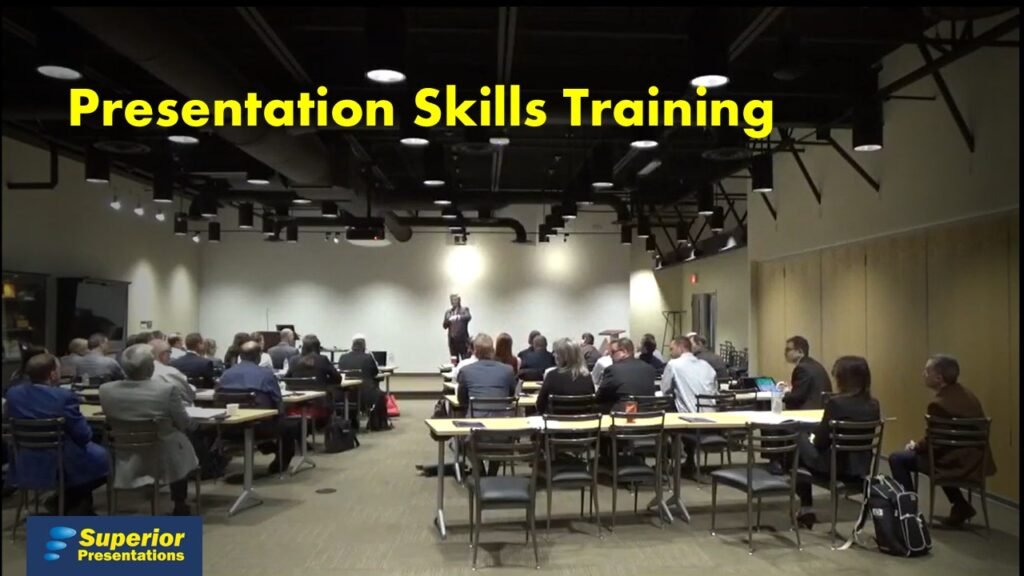
Why Presentation Skills Training Is Best Investment This Year When you think about “presentation skills training,” you might picture someone learning how to gesture correctly or avoid filler words. Naturally, those aspects matter. And here’s the truth that the best leaders already know, presentation skills training is business training. Your ability to speak clearly, persuade confidently, and deliver a message that lands, these are the skills that influence decisions, win clients, lead teams, and advance careers. If you can’t convey your ideas, they won’t matter.If you can’t present your value, others won’t see it.If you can’t communicate with clarity, people fill in the gaps: often incorrectly. From my three decades of coaching leaders and professionals, I’ve learned that presentation skills training isn’t about “performing.” It’s about communicating your value in a way that feels natural and credible. And when you do that, you enjoy amazing results. Why Presentation Skills Matter More Now We live in a world where: Your audience’s attention is shorter than a fruit fly’s patience. Hybrid meetings demand you communicate well both online and in person. Teams crave clarity because confusion costs money. Prospects don’t buy from the smartest person; they buy from the best communicator. Strong presentation skills give you an unfair advantage. Weak skills restrain your progress. What Effective Training Looks Like Effective presentation skills training doesn’t dump formulas on you.It helps you: Structure a message for people to follow Use language that moves people, without clichés Avoid “weed words” that weaken your credibility Speak with confidence even when you feel nervous Read the room and adjust your delivery Deliver online presentations that don’t feel like hostage videos You learn techniques you can use immediately in your next conversation, sales pitch, or team meeting. The Real Benefit: Confidence Through Competence People might say they want to “feel more confident.” What they really want is to know how to convey more confidence to their audience. What are the red flags they need to stop waving and what can they do differently? Confidence is in the perception of the audience. When you understand how to craft a message, when to pause, how to use your voice, and how to connect with an audience, your confidence grows naturally. Not theatrically. Authentically. Imagine that: more confidence because you feel more confident and comfortable with your audience and your message. Who Benefits Most from Presentation Skills Training? My clients who have seen the fastest transformation include: Executives who need to deliver strategic messages Sales teams who must influence under pressure Professionals who want to advance in their career Entrepreneurs pitching investors or customers If you need to communicate with others, presentation skills training is a massive multiplier of your ability to influence others to help you succeed. Where to Begin When you’re ready to elevate the presentation skills of your executive team, explore these training programs. And yes, they can be delivered locally in south-western Ontario, including Toronto, Mississauga, Hamilton, Niagara, Kitchener-Waterloo, London and especially Fergus. I have a soft spot for Fergus. Feel free to ask me about that. You can also arrange for online delivery which is available worldwide. Presentation skills training is not a luxury. It could be the best investment you make for your executive team this year. Next step is a phone or Zoom call to get acquainted and clarify the needs of your executive team. Imagine the results when your team delivers superior presentations every time they speak. Access More Presentation Skills Resources Looking For A Speech Coach? Learn More Here