
Build Trust With Your Body Langauge

Build Trust with Your Body Language How Your Body Language Can Build Trust or Destroy It Body language is relevant to your message because your audience tends to put more belief in what they see versus what they hear – especially when the two signals conflict. If you want your message to be believed, then ensure that your body language supports your words. Body language isn’t really a language. It’s more like a code. Although many hand gestures have meaning, much of body language is ambiguous. That means the audience interprets the meaning based on their perception. Their perception is based on their cultural norms, experience and emotional state. No surprise that people won’t all see you the same way. Your body language is working when people are not aware of it. That means that it is sync with your words. Body language is easier to notice when it’s out of sync. Imagine if you: Tell someone you love them with a scowl on your face. Explain your vision while you are slouched. Tell your team that you ‘got their back’ while you cross your arms and back away from them. Three Ways to Build Trust With Body Lanaguage Your Face The audience spends most of the time looking at your face. Why? Because that is the part that is most interesting and conveys the most emotion. The two most important parts of your face are your eyes and lips. The audience needs to see your face. Ensure that they can. Stand where they can clearly see your face. Don’t obstruct your face. Keep your hands away from your face because that is distracting and obstructs which lowers trust. This becomes more noticeable and damaging when speaking on camera. Your Hands Show your hands and we will trust you more. If you hide them, the audience might question your intentions. Don’t place your hands behind your back or in your pockets. It helps to gesture with your hands to reinforce your points. When siting at a table you will appear more trustworthy when you place your hands on top of the table. Movement How you move reveals your state of mind. When you are agitated or anxious you will tend to move quickly, stiffly or erratically. While we are listening, our eyes notice the movement and convey a message of conflict. It’s okay to move when you speak. Move slowly and purposefully because that signals that you are confident and trustworthy. Your body is always sending messages. Are you aware of the perceived messages? Are you in control of your body? Access More Presentation Skills Resources Looking For A Speech Coach? Learn More Here
Presentation Skills Training Results

Presentation Skills Training Results What were the results of presentations skills training? It’s not what you say about your programs and services that count. It’s what your clients say. Do you agree? What have my clients said about their experiences with my training, speaking and coaching programs? Feedback from Presentation Skills Training “I am still benefiting from taking this course in my many executive presentations. Thanks George.” Paula Jadischke, “I first met George in 2006 at the Canadian Management Center where he was facilitating a course entitled “Effective Executive Speaking”. After an intensive three-day course, I left a better, more confident public speaker and I continue to utilize the methods I learned in my career today. George possesses an incredible ability of connecting with people and making them feel comfortable delivering a subject that for many is far from comfortable, public speaking. He identifies your existing communication style and capitalizes on your strengths to make you better while at the same time making you aware of areas of improvement to develop. It was a great experience working with George and I would highly recommend anyone wanting to improve their public speaking or presentation skills to connect with him” Juan Panlilio, “I have had the pleasure of attending several presentations by George over the years, at the Chamber, networking groups and Rotary. He engages the audience, thinks out of the box, and always uses humour to get his points across. If you need to learn how to present, George is the man for the job.” Dean Rutty, Co-Owner/Project Manager, Graphic Ideas “George offers a great workshop on Presentation skills and takes time to understand his clients’ needs. As Senior Training Advisor at Bombardier Aerospace, I hired George for an internal customized senior management program. We received excellent feedback on the sessions.” Carol Ford, “As a professional speaker/trainer, George keeps his audience engaged by ensuring that they actively participate in group discussions and activities. He does his homework, ensuring that his materials are relevant to the audience he is presenting to. We have had the pleasure of having George provide our team with “Power Presentations” training, and resulting from that learning experience, George was once again invited to be a speaker/trainer at several of our client professional development events. I highly recommend George Torok to any organization that is looking for a professional trainer/speaker on marketing, effective presentations, and creative problem solving.” Cristina Dee-Ong “We have contracted the services George offers on multiple occasions. We have found George to be excellent in assisting us in focusing on our message and delivering a knockout presentation. I truly believe George has been very instrumental in us landing some very large projects.” Elliot Kohn “George worked with me, helping me crank my presentation skills up a notch. He provided candid critique and most valuable suggestions. George is a very clear thinker and an excellent observer of people. I really look forward to future sessions with George.” W.F.C. (Rick) Baker “Thanks again for your outstanding presentation on presentation skills at our conference last week! Even though you were speaking to a room filled with seasoned trainers and speakers, you added immensely to their deeper understanding of how to give great presentations. What you shared makes sense, even though many of us have been doing the opposite for years. It was like learning the secrets of success in presenting at a very high level. We look forward to doing more work with you in the future.” Wayne Vanwyck,CEO, The Achievement Centre International Are you ready to learn more about shaping the right presentation skills program for your team? Let’s talk soon. Call me, George Torok at 905-335-1997. If you’re not ready yet, feel free to subscribe to the weekly Superior Presentation Tips at www.TorokTips.com Access More Presentation Skills Resources Looking For A Speech Coach? Learn More Here
How to Use Rhetorical Questions When You Speak

How to Use Rhetorical Questions When You Speak Are you making the best use of rhetorical questions? A rhetorical question is a question that you pose – pause for one or two seconds – and then you answer the question. (Sometimes you don’t answer. You simply let the thought hang to allow them thinking space.) This is a powerful and dramatic technique to include in your presentations. Why? Because questions engage and if makes your presentation feel more conversational. The audience doesn’t care who asked the question. Their brain registers a question and answer, like a normal conversation. That makes it feel more friendly and less like a lecture or sales pitch. This technique can help you keep the audience better engaged throughout the presentation. Every time you pose a question, it engages them because questions engage better than statements. Statement after statement gets boring and annoying. When should you use a rhetorical question? Immediately before delivering an important fact. What is the real cost of this problem? How long have we been trying to solve this challenge? What are the most common mistakes? Use those questions to create anticipation for the facts that follow. The rhetorical question sets up the interest in their mind to welcomes the facts. Opening You might open your presentation with a rhetorical question: Would it surprise you to hear… Did you know that… Why did they make it so difficult… Transitions Use rhetorical questions as transitions between the parts of your presentation. If you’re launching a new product, you might use these questions to move through your presentation: What changes do we see in the marketplace? What are the threats and opportunities? How might we take advantage of these changes? What direction are we moving? What’s our next steps? Write your presentation A list of rhetorical questions is an easy and quick to outline a presentation. List three to ten questions that would take the audience through the thought process. How might you use rhetorical questions in your next presentation? Follow for more presentation tips or register for weekly tips at www.TorokTips.com Are you ready to have a conversation about transforming your presentations? Call me at 905-335-1997 to arrange an introductory conversation. Access More Presentation Skills Resources Looking For A Speech Coach? Learn More Here
Presentation Tip: Set Up the Question Period for Success

How to Set Up Q&A For Success Set up the question period for success When you plan to answer questions from your audience, here’s how to create a more effective Q&A period. Use the opportunity to answer questions from the audience because that helps your reinforce key points and provides insights into the mins of your audience. The two most damaging mistakes are in how to start the question period and how to end. In this tip, you’ll discover how to start. The biggest mistake is to answer questions after the presentation. That positions the question and answer as distinct from the presentation. Your presentation was about you and your smoke and mirrors and in the question periods that’s when you are really talking to us and addressing our concerns. I encourage you to incorporate the questions into the presentation. That makes the presentation feel more inclusive and more about the audience instead of simply your message. Early in your presentation, tell the audience when and how you will address their questions. Can they interrupt you anytime? Will you pause after each segment to take questions? Or would you prefer to take near the end? Note near the end not at the end. If you plan to answer questions near the end, here’s how you announce the question period. We have time for x minutes of questions and then I will close. Note Then I will close. Let them know that you will close after the questions. That way you finish with you intended message and not the answer to a weak question. Prepare people for the question period by announcing. “In two minutes. I’m going to invite your questions.” Don’t start with “Does anybody have any questions?” That question is both vague and annoying. It doesn’t invite questions. Instead, it suggests uncertainty. Invite questions with, “Who has a question about (my topic)?” That is clear, inviting and steers the questions on course. Don’t claim that you will answer all their questions – because you can’t. What can you do if you invite questions and there is silence? That might mean that they are still thinking about your message. You can stimulate their questions by starting with one of your own. “A question I am often asked is…(you state the question).” Then you answer the question. That provides momentum to more questions from the audience. Set up the question-and-answer session by making it part of the presentation and kick it off with clear direction. Follow for more presentation tips or register for weekly tips at www.TorokTips.com Are you ready to have a conversation about transforming your presentations? Call me at 905-335-1997 to arrange an introductory conversation. Access More Presentation Skills Resources Looking For A Speech Coach? Learn More Here
Presentation Skills Training for Executives
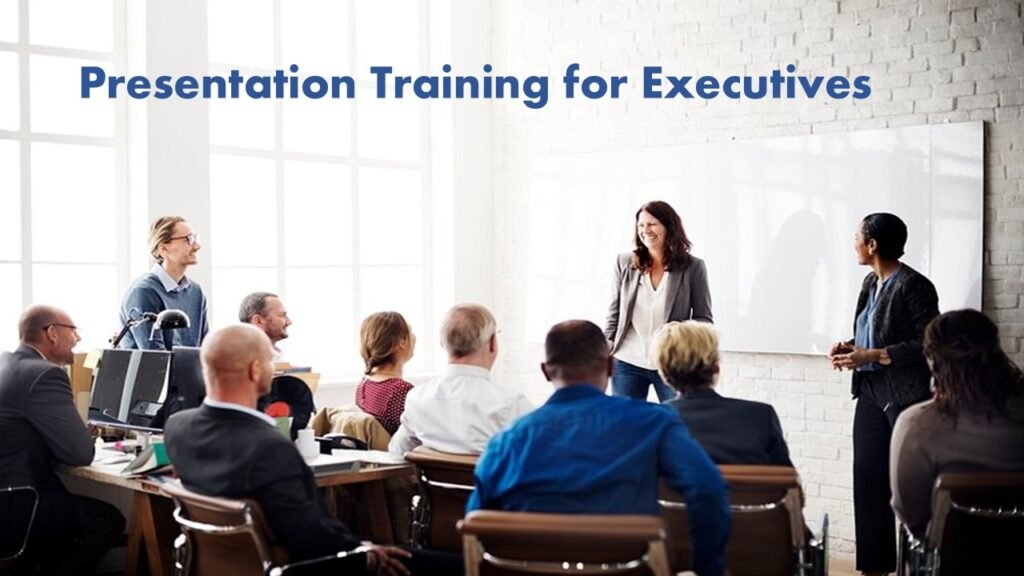
Presentation Skills Training for Executives When you are ambitious and producing results, you’ll get noticed, qualify for growth opportunities and be promoted. You’re happy to be promoted and you realize that you’re not 100% ready – if you’re honest with yourself. That’s okay. You might struggle with the imposter syndrome and that’s normal. That could be a good sign because you recognise that you need to get better. And that’s another good sign because you’ll look for and embrace opportunities to improve your skills. There are many skills that you as a promising executive need to improve. The most important might be communication and presentation skills because that is how you lead your team. They will notice how you communicate with them and others. The result might be respect, cooperation and positive results. Or they might be mocking you behind your back. How to Improve Your Executive Communication Skills? What can you do to quickly improve your presentation and communication skills? You could search for books to read. You might troll YouTube for instruction videos and when you really want to improve, you’ll find a course that offers presentation skills training for executives. You’re not a university student. You’re not a first line manager. You are an executive that needs to exhibit executive presence and superior presentation skills. When you speak, you want people to listen understand and act on your message. You Won’t Learn Presentations Skills on the Job You can’t wing it. You can’t afford to waste time and opportunities while you stumble through your learning curve. Recognize your need and goal. Then get the best help to transform your presentation and communication skills. You want instruction and practical advice from an experienced executive coach and confidant. Why consider me, George Torok for this critical role? Among my three decades of coaching and training experience I instructed the Effective Executive Speaking training program for the Canadian Management Centre over 12 years with two esteemed colleagues. The program combined training with group coaching. We successfully instructed hundreds of executives from both private and public sector to transform their presentation skills. My colleagues included two astute communicators starting with Peter Urs Bender, author of the bestselling, Secrets of Power Presentations. Peter was Swiss born who came to Canada at age 18 to learn English. He loved the country and stayed. He never spoke perfect English, retained his Swiss accent, yet he became known in the press as Canada’s Presentation Guru. My other colleague was John Robert Colombo a Canadian literary icon. He has published over 200 titles or literary works as an author and editor. He received the Order of Canada for his literary success. He recognizes the power of words and oral communication. As you can imagine, I learned much from working with these two thought and action leaders. They did more than think, they acted and demonstrated their communication lessons. Although we agreed on the principles and techniques, we each had our own personal strengths and styles. That helped the executives in the classes recognize that they could leverage their individual strengths and personalities. We three instructors observed and learned from each other along with offering feedback and constructive feedback. Every class we were teaching and learning. —– What did Peter Urs Bender say about George Torok I was very impressed with your style of presenting. You have command, yet still show warmth for your audience. George you were outstanding! Peter Urs Bender, Canada’s Business Presentation Guru and author of Secrets of Power Presentations What did John Robert Colombo say about George Torok? I have known George Torok for close to a decade. The two of us work side-by-side to deliver courses at the American Management Association’s Canadian Management Centre in Toronto. After a session with George, I find I have picked up at least one new fact (or novel approach) to a problem (or a possibility) in spoken (or written) communication. So I value our association over and above our work as a team. One of George’s special talents is his ability to bring out the best in other people. He is able to put his finger on the key passage of a speech or a report and right away find a better way to express it in words, tones, or gestures. He regularly works on a one-to-one basis with senior business managers and corporate executives to assist them in the drafting and the delivery of their messages in the most effective ways possible. What surprises me the most about George is his ability “to turn a negative into a positive.” Because of his background in business and marketing, and because of his experience as a course leader and an executive coach, he shows genius in taking an ordinary, neutral, or negative statement and immediately transforming it into a message of hope, power, or achievement. John Robert Colombo, C.M., D.Litt. President, Colombo & Company; author of “Colombo’s Canadian Quotations,” editor of “Canadian Global Almanac,” and other popular reference books www.colombo.ca Who were the corporations that entrusted George, Peter and John with training their executives? See the list of those clients here: Client Results and Testimonials | Superior Presentations Access More Presentation Skills Resources Looking For A Speech Coach? Learn More Here
Testimonials from Presentation Training Clients
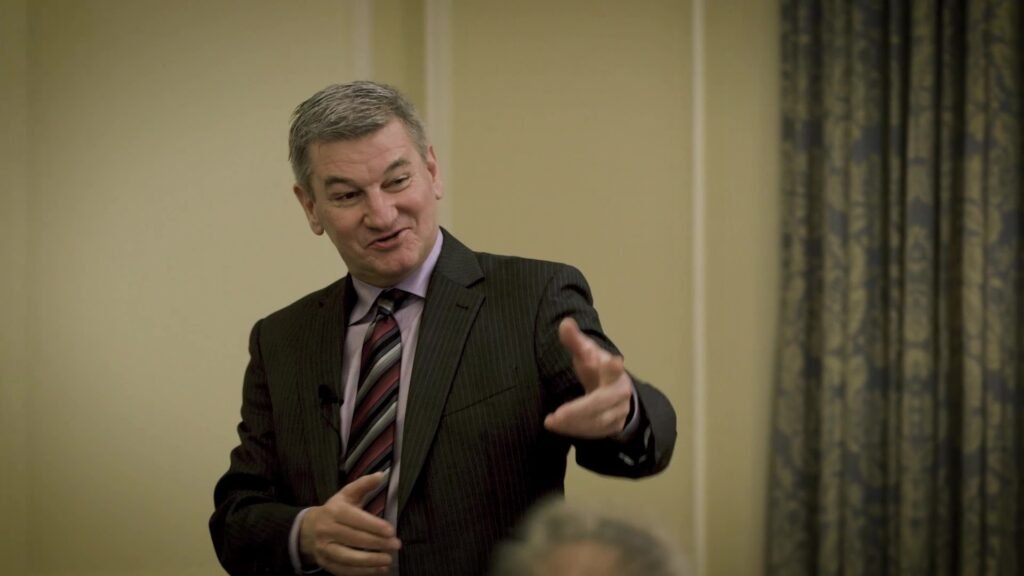
Testimonials From Presentation Training Clients Superior Presentations Training Results & Feedback What did clients and participants say about what they gained from the presentation skills training programs from George Torok? How did they feel about the learning and experience? —– George presented to my TMU ENT 801 Life Design class a week before they had to do individual presentations in front of the whole class – something that filled them with fear and dread. In only an hour, George taught them enough tips and techniques that they were able, not only to conquer their fears, but present their Life Lessons without scripts or cue cards, but spoke from the heart with passion, conviction and enthusiasm. This demonstrates that George not only has great wisdom in teaching others how to present more effectively but his teaching STICKS! That’s so important. I have taken George’s Executive Speech workshop in the past and I knew he was THE Expert to have in to teach my students this life long skill that they will use everyday in their professional lives. Thank you George. Anyone who wants to improve their presentation skills – just hire George. You will not regret it and your bank balance will improve. Patti Pokorchak —– George consistently does a great job delivering his “Superior Presentations” workshop. He recently delivered his workshop virtually to a group of executives I work with and it was just as good as his live deliveries. Great engagement of the participants and excellent feedback on how well the session was conducted – a very positive learning experience with great take-aways for all those who attended. Every time I sit through one of George’s workshops, I always add to my own techniques for communicating better and delivering better presentations. Thanks George Tony Martino, President JTX Inc., Group Leader, CEO Leader CEO Global Network —– Had the opportunity to attend George’s seminar “Delivering Superior Presentations …. because inferior never wins”. The course was informative, fun and provided simple, yet effective methods to improve the impact of your presentations. I plan to use some of these newly found skills in a presentation that I am doing this week. Thank you, George, John Perrcy, CEO Mentor. Leadership Training Coach —– George immediately captured my attention in the first five seconds. He continued to actively engage us throughout the presentation. I was impressed that he demonstrated the techniques of an effective presentation and explained the methodology behind it. It was like a magician revealing the secrets to his illusions. He demonstrated profound knowledge of communication, persuasion and human behaviour. His entertaining antics and drama helped us remember the lessons that we could apply immediately. Bob Singh Minhas —– George Torok was engaging, informative and had excellent tips on how to deliver Superior Presentations. Highly recommend him for anyone looking for ways to better their presentation style. Navjot Chhizer, Business Advisor at the Halton Region —– I have regularly used tips and techniques learnt from George to improve my content and delivery style and it has substantially upped my presentations. George is a master at what he does and I unreservedly recommend him if you are looking to improve your speaking and presentation skills. Parmjit Singh, PhD —– I attended one of George‘s workshops on presentation skills. It included lunch (sandwiches and salad) While I was finishing my lunch George was introduced by the host, John Wilson of CEO Global Network. George came to the front and started his workshop. There was utter silence. George stood there, his left hand finger tips touching their respective right hand finger tips, a wide smile on his face, his eyes scoping out the audience from left to right and back to the left. I slowly put down my cutlery and looked up at George. He had my full attentionwithout saying a word. Wow! Pausing is one of several takeaways I gleaned from the workshop and usewith great effect since. I can highly recommend George for not only your business needs but also your private presentation needs. Jean-Louis Brenninkmeijer, Founder & Chief Visionary Officer, Little Canada —– The FOCUS Leadership Team engaged George to help us tune the presentation of our Strategy Execution Round Table, our premier marketing event and he did an extraordinary job. Giving feedback to professional, seasoned facilitators has its own challenges which George handled masterfully. George uses the right balance of candour with positive reinforcement. He took time to get to know us and our business to make sure that his feedback and guidance was relevant. A great investment! Fred Pidsadny —– Having known George for the better part of two decades, I have seen (and heard) his career as a professional speaker flourish. George and I first worked together on committees at the Burlington Chamber of Commerce. I was proud to also recommend George as one of the guest lecturers at the Chamber School we used to have – the Canadian Institute for Organizational Management. I highly recommend George. His message, style and personality all combine for a memorable and impactful presentation. Scott McMammon, ACE, CCE, Chamber Executive —– As a professional speaker/trainer, George keeps his audience engaged by ensuring that they actively participate in group discussions and activities. He does his homework, ensuring that his materials are relevant to the audience he is presenting to. We have had the pleasure of having George provide our team with“Power Presentations” training, and resulting from that learning experience,George was once again invited to be a speaker/trainer at several of our clientprofessional development events. I highly recommend George Torok to any organization that is looking for a professional trainer/speaker on marketing,effective presentations, and creative problem solving. Cristina Dee-Ong —– George offers a great workshop on Presentation skills and takes time to understand his clients’ needs. As Senior Training Advisor at Bombardier Aerospace, I hired George for an internal customized senior management program. We received excellent feedback on the sessions. Carol Ford —– I first met George in 2006 at the Canadian Management Center
Is Your Presentation on Fire?

Great Balls of Fire Great Balls of Fire I believe that Jerry Lee Lewis was one of the greatest early rock and rollers. His music was the most engaging, His delivery was the most captivating. He was bold and challeging. He rocked the world of music and attracted attention. In this movie scene Dennis Quaid performed this song with the Jerry Lewis arraogance and brash in-your-face rock and roll. When he poured the lighter fuild on the piano he demonstrated his boldness about his brash rejection of the norms. He was was releashing his great balls of fire literaly. This is a fabualous visual scence of showing what you mean. This scene demonstrated arrogance, boldness and controversy and it grabbed the attention of the audience. It inflamed their passion. He was competiting with Chuck Berry and he knew he had to be radically different. Are you willing to push the boundaries to be differrent from your competition? How might you light a fire that imflames your audience and clients? What’s the craziest stunt that you’ve done recently? What’s next for you? Let’s enjoy the real Jerry Lee Lewis. Notice his over emphasised hand movements. Access More Presentation Skills Resources Looking For A Speech Coach? Learn More Here
Adapt Your Presentation to the Audience

Adapt Your Presentation to the Audience When your approach doesn’t resonate with the audience, you need to adjust your approach to the audience. What do they want to hear? This movie clip from The Blues Brothers illustrates how they want to play their blues and the audience wants to hear country, ala Hank Williams. Who needs to change? The presenter or the audience? The presenter. In this clip you can notice the shift from the band and instant postive response from the audience when the music changed to their liking. Speak to the audience in the language that they understand and want to hear. I first learned this lesson when I was a DJ spinning records for dances and weddings. A successful evening wasn’t about what I wanted to hear or play. It was about the audience. What did they want to hear and what music would encourage them to dance? If they were dancing, they were happy. My challenge was to encourage them to dance and exhaust themselves on the dance floor. I had to explore that every time by testing them early and noticing how they reacted. Usually, the first six songs told me alot of about thiis audience. That came from paying attention to the audience and understaning the common music themes. How did they react and how did they dance. What patterns did I see in their dance moves that told me how they might feel about country, rock & roll, waltz or jazz? The way you learn that is by observing their reactions and patterns. I wasn’t a fan of country music and I didn’t want to play or listen, however I learned that those country hicks could be a wonderful audience when they heard the music they loved. I learned to appreciate them and their love of their music. What is the music that your audience wants to hear and how might you start liking it more? And yes, I much more appreciate this clip of the Blues Brothers presentation this blues song, Every Body Loves Somebody. The Blues Brothers at their best with the right audience. If you appreciate the blues you will enjoy this next clip when Arretha Frankoin busts out with this redition of Think. Enjoy, even if you are a country music fan. Be clear on the expectations of your audience and what they want. That’s how you shine – when you meet and exceed expectations. Access More Presentation Skills Resources Looking For A Speech Coach? Learn More Here
The Perfect Presentation Fallacy
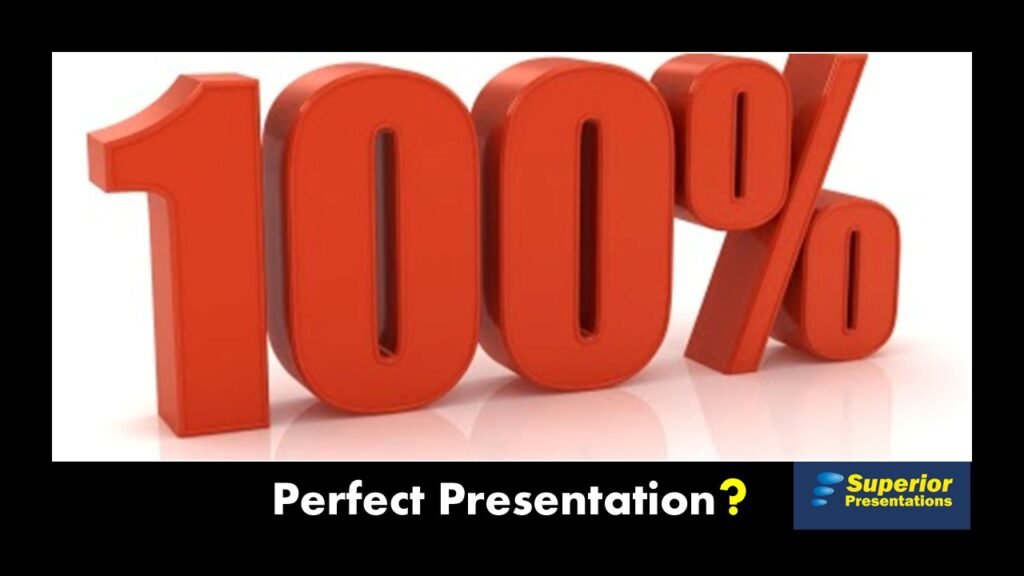
Perfect Presentation Fallacy Are you ready for this myth buster? There is no perfect presentation. The promise of a perfect presentation is a lie. There is no such thing. Don’t believe the hucksters who offer you that they will show you how to deliver a perfect presentation because it’s phony. It’s click-bait and a false promise. The promise of a perfect presentation is a lie. Guess what? You will never be perfect, and you will never deliver a perfect presentation. Why do I say that? Because perfection isn’t the goal. You want your presentation to be successful and effective but not perfect. There’s a significance difference between successful and perfect. What does a perfect presentation mean to you? Does that mean that every person in the audience rated you a 10 out of 10? The larger the audience, the less likely that is. Even if every person who responded to the survey rated you a 10, that doesn’t make the presentation was perfect. It simply means that many people enjoyed your presentation. That means you were effective. Or maybe it means you exceeded their expectations or they had low expectations. The surveys don’t ask people to rate the presentation on a scale of perfection. Instead, they ask them to rate the presentation on a scale of their satisfaction. Satisfaction and perfection are two distinct concepts. When your spouse tells you that you did something perfectly, that simply means you exceeded their expectations because…(fill in the blanks). My advice to you is to stop chasing perfection and focus on success and effectiveness. Define the success of your presentation by what you want the audience to do as a result of your presentation. If you have moved a significant number of your audience to act as desired, it was a successful presentation. Instead of chasing a perfect presentation, ask yourself, “How might I deliver a successful presentation?” or “How might I make the next presentation better?” How can you be more effective with your presentation? These are valid and productive questions to ask yourself because the outcome is measurable based on the audience results. Why is effective and successful more relevant than perfect? Because effective and successful is based on the results you get from your audience. Perfection is based on your egotistical self-image about your appearance. Success is about your audience. Perfect is about you and you know you’re not perfect when you’re honest with yourself. The pursuit of perfect suggests that you are artificial and guarded. You won’t be real and open. Instead, you are guarded and plastic. How is that even close to perfect? Successful and effective means that you connect with the audience. They perceive you as authentic which means that you are comfortable with your flaws – not perfect, simply authentic and worthy of trust. Be bold, be real and ditch the misguided pursuit of perfect presentation. By the way, I’ve been speaking, training and coaching for 30 years and I’ve never delivered a perfect presentation. I’ve never seen a perfect presentation, and I’ve attended many conferences and watched multitudes of professional speakers and I’ve never witnessed a perfect presentation. I’ve experienced many amazing presentations. And none were perfect because there is no perfect. When you decide to deliver an effective presentation, you give yourself permission to be imperfect with flaws that exhibit your humanity and authenticity. Don’t pursue perfect presetnation, instead strive to be effective and successful with your presentations. Perfection is about you. That means your audience loses. An effective and successful presentation is about the audience. That means they win. Perfect is for math exams. Access More Presentation Skills Resources Looking For A Speech Coach? Learn More Here
What is a Superior Presentation & How Can You Get There

What Is a Superior Presentation & Why Is It Important to You? What is a superior presentation? A superior presentation must be better than the competition. What does that mean to you? Who or what is your competition? If you are delivering a sales presentation, your competition might be other suppliers of your product or service. If you are applying for a job, your competition might be other job candidates. If you are presenting your ideas or solutions to your team, the competition might be ideas from other team members. The most challenging competition you face is the collection of thoughts in the minds of your audience. What are they thinking or feeling while you’re speaking? That is your toughest competition because that is where the decisions about your message reside. What are they thinking and feeling at that moment about your and your message? Distractions in the Mind of Your Audience The thoughts and questions in their minds might be: I don’t understand this person. That doesn’t make sense. Oh, I tuned out and wasn’t listening because it was boring. That’s confusing. I don’t know if I believe this person. Why am I here? What’s the point? How long is this going to take? These thoughts and doubts are the most significant competition that you face for your message because you need to burst through those objections in their mind before you can land your message. Why do you need to deliver superior presentation? The opposite of superior presentation is inferior presentation. And guess what? Inferior never wins. The facts don’t always win. The better message wins. Superior doesn’t mean perfect. It means better than the rest. The runner who wins the races wasn’t perfect or the best. They were simply better than the competition today. That’s something else to keep in mind. Your competition changes every day because conditions change and people change. And some presenters get better because they invested in their presentation skills. The key elements of a superior presentation A superior presentation is about the audience, not about you. It provides relevant information in a way that is easy to understand. A superior presentation grabs attention and is easy to listen to. It feels real and builds trust. A superior presentation conveys confidence, clarity and credibility. Don’t be offended by the word superior Superior is not about ego. It’s simply about developing your skills and getting better every time you present or speak. What will you do to make your next presentation better than the last one? What will you change? How will you get more productive feedback? Is it time to attend a presentation skills training program? Is it time to work one-on-one with a presentation skills coach? You can boost your presentation skills and become better than you were yesterday and better than your competition when you develop your skills and intend to be better every time you speak. Then you are assured of delivering a superior presentation. What will you do today to be better than you were yesterday? What will you do tomorrow to be better than you were today? Superior Means Better What can you do to make your next presentation better than the last one? What can you do to make your presentation better than the competition? What are you doing to ensure that your next presentation is superior to your competition? George Torok is the founder of Superior Presentations. He helps business speakers deliver the intended message more effectively. You can arrange group training for your team or one-on-one coaching for yourself and senior executives. Your presentations and communications can be superior – or inferior. Your choice. Presentation training can be delivered across Canada and USA online to meet your convenience for your distributed team. You can arrange onsite training locally in southwestern Ontario including Burlington, Hamilton, Mississauga, Toronto, Oakville, Niagara, Kitchener-Waterloo, Guelph, Brantford, London and surrounding areas. Access More Presentation Skills Resources Looking For A Speech Coach? Learn More Here