
How to Open and Close Your Presentation

How to Open And Close Your Presentation with Impact Make the best first and last impression when you speak. What are the three distinct parts of your presentation? They are the opening, body and close. The body is the major part of the presentation The opening and close might only comprise 10 to 15% of the time, yet they are critical because they convey first and last impressions. You’ve probably heard that first impressions are important. Did you know that last impressions are also important? The last impression follows the law of recency. We have selective memory, and we tend to remember firsts and lasts. We also place more importance on firsts and lasts. What does that mean to you as a presenter? Spend more time and effort getting your opening and close right. When creating your opening and close, consider the possibility that the audience might only remember these two parts. If that was true, would they have received your intended message? If not, revise your opening and close. The body is the detail, the opening and close provide the motivation and the direction. Rehearse your opening and close separately so you can deliver them confidently and effectively. If you are using slides, blank the screen while you speak during the opening and closing because you want to be the focal point. You want the audience focused on you during your opening and closing so your message is received, understood and remembered. Don’t allow a slide to interfere with your messages during these key parts of the presentation. What are common mistakes you can avoid in the opening and close? What are effective techniques and specific phrases you can use? When you speak, create and convey the first and last impressions that support your message. How to open your presentation? Your first words are important because your audience is judging you. They are scrolling through questions in their mind: Should I listen? How long will this take? Do I trust the person? How painful will this be? When will we get to the relevant part? What does this mean to me? The purpose of your opening is to grab their attention, establish rapport and set the direction. Most importantly – grab attention. How might you do that? First, be aware of silly phrases to avoid: My name is… and a little bit about me (we don’t care) Today I’m going to talk about (boring) Thank you for inviting me to speak (boring and irrelevant) I’m honored to be invited (wasting time and feeling phony) Instead, start with: An enticing promise A bold statement An intriguing question An emotional trigger Study these suggested phrases for each opening method. An enticing promise: By the end of this presentation, you will understand the 3 criteria for You have the tools for success, and today you will learn how to use them You don’t need to waste more money if you use this process A bold statement: If we don’t address this threat, we will be out of business in six months Success is never easy, yet it can be simple We have a secret weapon that is waiting to be used An intriguing question: Did you know… Would it surprise you to learn… What is the most dangerous question that our clients are asking about… An emotional trigger: Imagine a world where… (The word “imagine” engages and triggers our imagination) How would you feel about… (“feel” is emotional and more powerful than “think” which is logical) What scares you about… (tap into the powerful emotion of fear) My daughter asked me about… (family stimulates emotional connections) Review these opening phrases. Rehearse them out loud. Play with different endings that fit your circumstances. Get comfortable with these opening lines. Imagine the power of your presentation when you grab their attention in the first few seconds with the right words. Close your presentation with purpose. The close to your presentation is important to the success of your message. Your close is the last impression. You can make it the lasting impression that resonates within their minds even after they leave the room. How can you do that? Prepare the precise words that you will end with. Don’t wing your close. There might have been some freeform parts during the body of your presentation. However, words in your close are precious. Chose them purposefully and deliver confidently. Remember this guideline when creating your close. If they only remember the close, will they have the essence of your message? First let’s identify the weak closes that you must discard. That’s all, I’m done now. That’s everything I know. I think that covers it. Oh, looks like my time is up. Thank you* *If you’re wondering why “Thank you” is a poor way to end, read this blog post. Don’t End with Thank You. Instead end proud and strong Consider these options for your close Summary Call to action Challenge Reflect the opening I want to leave you with Summary Briefly mention the top three points. You covered the detail in the presentation. By reminding them of the key points you reinforce these points and relative details. Call to action If the purpose of the presentation was to move people, you remind them in the close. In a good sales presentation, you highlighted the call to action earlier in the presentation. This is simply the final reminder of action required. A phase that works well is “the next steps are”. Challenge This is a variation of the call to action. Challenge them to act, start the process or achieve a goal. Reflect the opening Tie the close to what you said in the opening. You might repeat the opening line. If you opened with a question you might repeat the question or answer it or tell them the answer. This technique conveys closure to the opening dilemma. I want to leave you with,,, This is a warm close that can combine with the other options. I
Why Presentation Skills Training is Best Investment
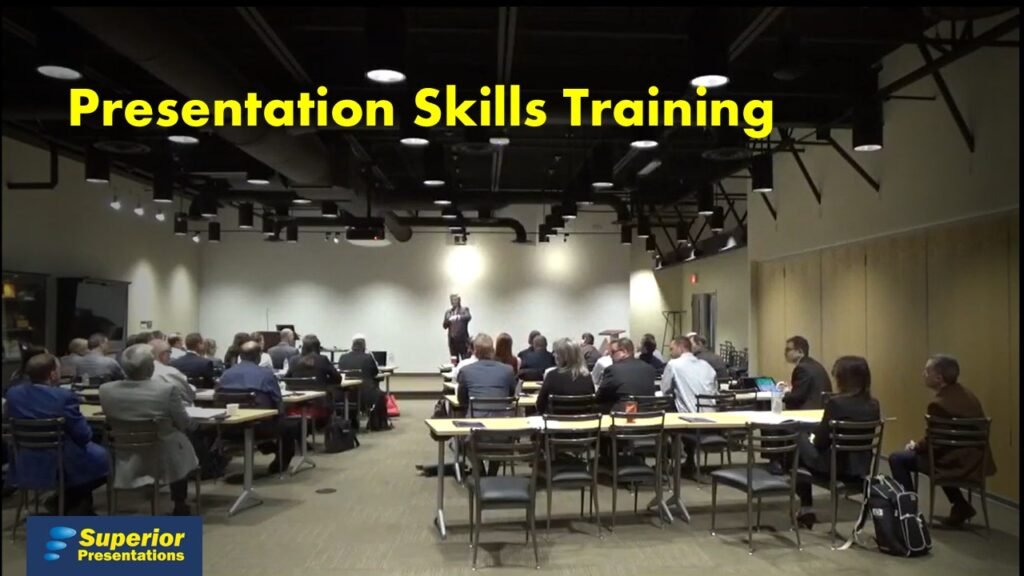
Why Presentation Skills Training Is Best Investment This Year When you think about “presentation skills training,” you might picture someone learning how to gesture correctly or avoid filler words. Naturally, those aspects matter. And here’s the truth that the best leaders already know, presentation skills training is business training. Your ability to speak clearly, persuade confidently, and deliver a message that lands, these are the skills that influence decisions, win clients, lead teams, and advance careers. If you can’t convey your ideas, they won’t matter.If you can’t present your value, others won’t see it.If you can’t communicate with clarity, people fill in the gaps: often incorrectly. From my three decades of coaching leaders and professionals, I’ve learned that presentation skills training isn’t about “performing.” It’s about communicating your value in a way that feels natural and credible. And when you do that, you enjoy amazing results. Why Presentation Skills Matter More Now We live in a world where: Your audience’s attention is shorter than a fruit fly’s patience. Hybrid meetings demand you communicate well both online and in person. Teams crave clarity because confusion costs money. Prospects don’t buy from the smartest person; they buy from the best communicator. Strong presentation skills give you an unfair advantage. Weak skills restrain your progress. What Effective Training Looks Like Effective presentation skills training doesn’t dump formulas on you.It helps you: Structure a message for people to follow Use language that moves people, without clichés Avoid “weed words” that weaken your credibility Speak with confidence even when you feel nervous Read the room and adjust your delivery Deliver online presentations that don’t feel like hostage videos You learn techniques you can use immediately in your next conversation, sales pitch, or team meeting. The Real Benefit: Confidence Through Competence People might say they want to “feel more confident.” What they really want is to know how to convey more confidence to their audience. What are the red flags they need to stop waving and what can they do differently? Confidence is in the perception of the audience. When you understand how to craft a message, when to pause, how to use your voice, and how to connect with an audience, your confidence grows naturally. Not theatrically. Authentically. Imagine that: more confidence because you feel more confident and comfortable with your audience and your message. Who Benefits Most from Presentation Skills Training? My clients who have seen the fastest transformation include: Executives who need to deliver strategic messages Sales teams who must influence under pressure Professionals who want to advance in their career Entrepreneurs pitching investors or customers If you need to communicate with others, presentation skills training is a massive multiplier of your ability to influence others to help you succeed. Where to Begin When you’re ready to elevate the presentation skills of your executive team, explore these training programs. And yes, they can be delivered locally in south-western Ontario, including Toronto, Mississauga, Hamilton, Niagara, Kitchener-Waterloo, London and especially Fergus. I have a soft spot for Fergus. Feel free to ask me about that. You can also arrange for online delivery which is available worldwide. Presentation skills training is not a luxury. It could be the best investment you make for your executive team this year. Next step is a phone or Zoom call to get acquainted and clarify the needs of your executive team. Imagine the results when your team delivers superior presentations every time they speak. Access More Presentation Skills Resources Looking For A Speech Coach? Learn More Here
Why Does Communication Fail?
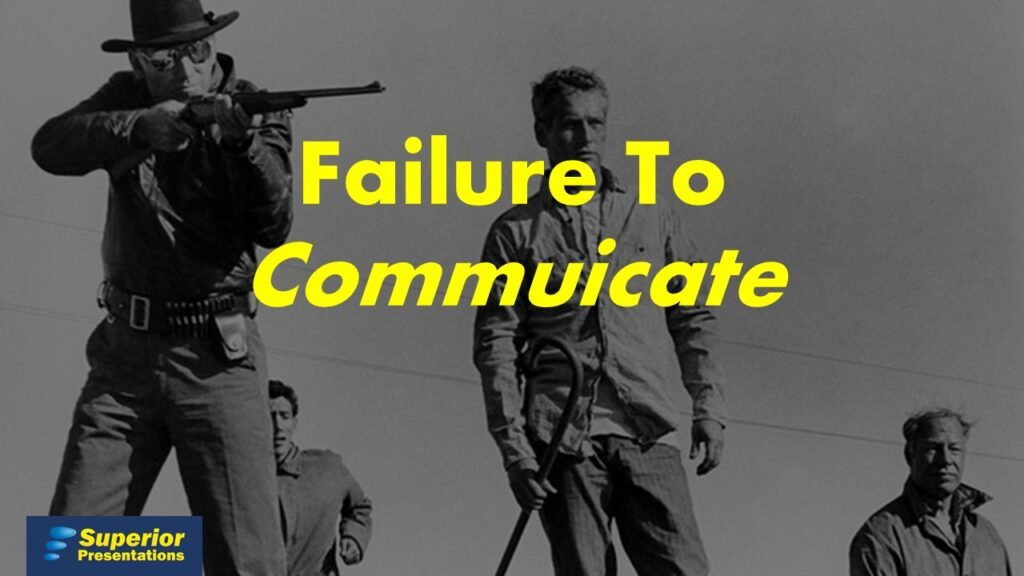
Why Does Communication Fail? When did you last experience a failed communication? Perhaps it was with your spouse, child or other family member. Was it with a team member at work, a client or supplier? What were the points of communication breakdown? What were the results of those failures to communicate? How did you resolve the problem? Are you still wondering how to fix it? Sometimes the intended message doesn’t get through. Sometimes the communication breaks down, and they don’t receive the message you intended. Maybe they heard a different interpretation of your intended message. Was it the words you used or another factor? Maybe they heard the real message that your words masked but your emotions revealed. Let’s explore a graphic illustration of failed communication in the classic movie, Cool Hand Luke. “What we have here is a failure to communicate.” That statement is from the movie, Cool Hand Luke, staring Paul Newman as Cool Hand Luke, a rebellious inmate in a southern USA chain gang prison during the early 1950s. You might not relate to life in a chain gang prison, yet you might still relate to the communication challenges in this movie. That statement appeared at two significant events during the movie. The first time is when the captain of the prison camp proudly presented Luke as the recaptured prize after Luke’s first attempted escape. As the captain of the prison camp, the only message he wanted the prisoners to receive was “don’t mess with me”. Yet, he didn’t say that. Instead, it seems he craved respect and appreciation from the prisoners that he threatened and dominated. After Luke was captured and presented to the rest of the prison gang, additional shackles were attached to his feet. The captain announced that the shackles were for Luke’s own good. Or were the shackles punishment? The Danger of Emotion Luke defiantly responded with sarcasm, “I wish you would stop being so good to me, Captain.” Luke would have been more productive if he said, “Please take these shackles off me because I’ve learned my lesson.” Too late. At that point, the angry captain responded with, “Don’t you ever talk to me that way”, then he beat Luke viciously with his whip. After Luke is lying on the ground, the captain speaks to the group and utters the phrase, “What we have hear is a failure to communicate.” Why did he say that? Curious that he didn’t admit that he failed to communicate. Instead, he suggested that the failure to communicate fell upon the receiver. In other words, “It’s your problem that you didn’t understand my message, not me. How many times have we stated our message and blamed the receiver for misunderstanding? There were many failures to communicate in this movie, and I believe that was the point. The movie followed Luke on his journey as a rebel. It was easy to admire him as the rebel and then you need to sit back and ask. “Luke, what’s your point?” What are you trying to accomplish? Why are you being so self-destructive? What’s your purpose and your intended message? I believe that Luke didn’t figure that out for himself and that might be the lesson for us. What’s your point? What do you want to accomplish? What’s your intended message? What we have here is a failure to communicate. In the final scene, Luke escaped prison again and is surrounded by the prison authorities led by the captain. Luke in his bold and continued rebellious way appears at the window in his refuge and mocks the captain by repeating the captain’s phrase, “What we have here is a failure to communicate.” That might seem like a poignant summary of this movie until the captain grabs a rifle and puts a bullet in Luke’s head. That was a sad and shocking end to this movie because I was rooting for Luke the rebel. Perhaps it was meant to reinforce the failure to communicate. Perhaps the movie was a reinforcement of the difference between what people meant to say with their emotions and what they said with their words and then with their actions. Early in the movie when Luke boosted, “I can eat 50 eggs” what was he really trying to say? Maybe he was trying to say, “I’m different”, “I want your respect”, “I will break your rules”. When the captain announced, “What we have here is a failure to communicate”, was he admitting his own failure to communicate or was he suggesting that it’s your problem that you didn’t understand my message? That’s an easy mindset in a prison. I wonder how many executives and managers think the same way. You’re my prisoners. It’s your job to understand, not my job to understand. When Luke repeated that phrase at the end of the movie, he was right. You are not communicating with me and I’m not communicating with you. That was his dying statement because the bullet in his head delivered the final message from the captain. I imagine that you will experience many failures to communicate in your workplace. How will you recognize them? How might you resolve them? In this movie communication failed because of emotions. Effective communication starts with you understanding your audience and how they might be receiving your message. Avoid the failure to communicate when you understand and deliver your intended message. Access More Presentation Skills Resources Looking For A Speech Coach? Learn More Here
No More Killer Presentations, Please
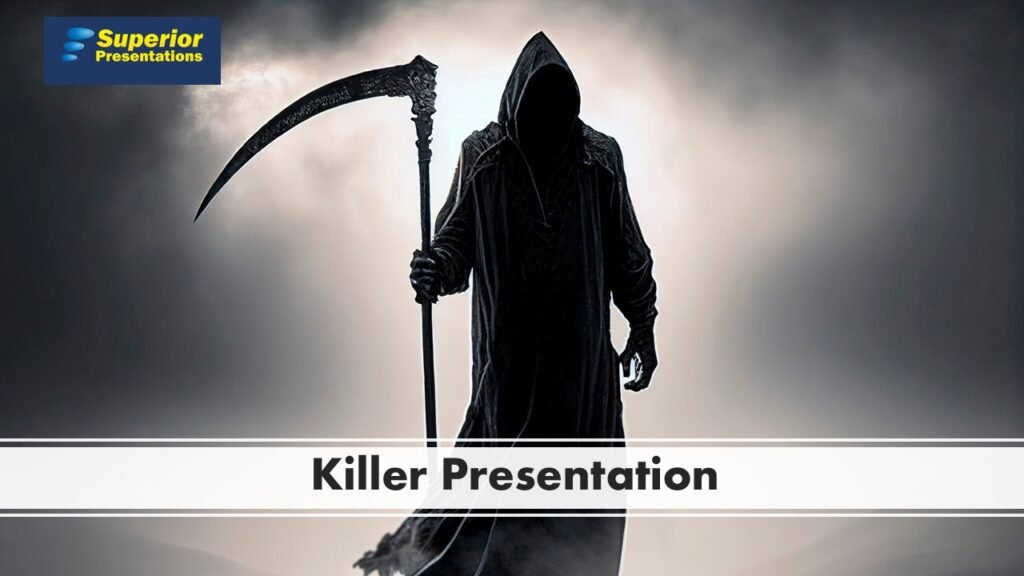
No Killer Presentation: Show Mercy Don’t deliver a killer presentation. Don’t even think it. Stop with the killer presentations talk. Killer presentation is a mindless and insensitive phrase to address presentation skills. Have you noticed articles and videos that promise you “How to deliver a killer presentation”? Why would you want to kill your presentation? What might that mean? Words matter and mostly importantly, so does your mindset. What does the word killer mean? Murderer, assassin, mercenary, criminal. Why would you want to deliver a killer presentation? Who do you want your presentation to kill? Killer doesn’t mean good or great. Kill and killer are negative words. Why would anyone suggest that you kill your presentation or deliver a killer presentation? Who and what do you want to kill? Imagine if you substitute the word murder for the word killer. Would you want to deliver a murder presentation? Would you murder your audience??? What are they thinking? Did they mean successful presentation? Did they mean effective presentation? Did they mean confident presentation? Killer doesn’t mean successful, effective or confident unless you are a hired gun, a person who kills for money. How can that be compared to delivering a presentation? You killed it. What does that mean? It’s dead, a corpse. Who wants to deliver a killer presentation? A soldier. A hit man. A gladiator. These people need to kill their opponent so they can survive. It’s the kill or be killed scenario. Clear and simple. Why would anyone compare this life and death struggle to speaking to your team, prospect or clients? Why would you want to kill the presentation or the people in the room? Words matter especially in a conversation or presentation. I want to kill you. I want to kill this presentation. Those are bad words and convey the wrong message. Imagine if you started your presentation with the words “This presentation will kill you”. I’m going to kill this presentation. At the end of this presentation, you will be dead, because I killed it. Would you say those vile words? So why think it? Please don’t intend your presentation to kill, main or harm your audience. Instead use your presentation to engage, inspire and enhance your audience. What names might come to mind when you hear the word killer? Charles Mason, Carlos the Jackal, Jack the Ripper. Did you know that Vlad the Impaler was a notorious mass murderer who delivered a killer presentation? He had his enemies decapitated and their heads stuck on poles along the road to his castle. How’s that for a killer presentation? What are other killers that you might know? Sarin gas, cancer, Ebola, The Black Plague. Nuclear war. Why would anyone associate the word “killer” with presentations? What were they thinking? Why were they insensitive to the negative association with the work killer? Why would they post articles or videos about delivering a killer presentation? Perhaps they believe that offensive word is click bait and they might attract curious views. Perhaps they really believe that killer is a good word to describe a presentation. And that suggests how destructive their tips, ideas and perspective are. They simply want to kill you, kill the audience and the kill the presentation. That would make you a killer. That mindset portrays your audience as victims. Innocents who are slayed by your presentation. Do you want to kill, slay or torture your audience. Instead, connect, convince and compliment. Intrigue, question and persuade them. I’m suprised to see Harvard Business Review stooping this low by publishing this article https://hbr.org/2013/06/how-to-give-a-killer-presentation Don’t kill your audience. Don’t try to deliver a killer presentation. Don’t be an assassin. Instead connect with your audience. Speak with them – not at them. Treat them with respect. Because they don’t want to be killed and you don’t want to be known as a killer. Do you really want your audience thinking “Kill me now because I can’t stand this killer presentation”? Can we agree that we don’t need a killer presentation? Instead let’s deliver effective, successful and winning presentations. Instead of killing your presentation, breathe life and energy into it. Inject life and energy into the presentation to wow your audience. Instead, Imagine delivering a superior presentation. Inject life and energy into your presentation. Connect with your audience. Celebrate your message. Enhance the condition of your audience. Make their life and opportunity better. Let’s stop this silly talk about “killer presentation”, Please! Life you can celebrate with joy. Access More Presentation Skills Resources Looking For A Speech Coach? Learn More Here
How To Open and Close Your Presentations

Master the First And Last Impressions What are the three distinct parts of your presentation. They are the opening, body and close. The body is the major part of the presentation. The opening and close might only comprise 10 to 15% of the time, yet they are critical because they convey first and last impressions. You’ve probably heard that first impressions are important. Did you know that last impressions are also important? The last impression follows the law of recency. We have selective memory, and we tend to remember firsts and lasts. We also place more importance on firsts and lasts. What does that mean to you as a presenter? Spend more time and effort getting your opening and close right. When creating your opening and close, consider the possibility that they might only remember these two parts. If that was true, would they have received your intended message? If not, revise your opening and close. The body is the detail, the opening and close provide the motivation and the direction. Rehearse your opening and close separately so you can deliver them confidently and effectively. If you are using slides, blank the screen during the opening and closing because you want to be the focal point. You want the audience focused on you during your opening and closing so your message is received, understood and remembered. Don’t allow a slide to interfere with your messages during these key parts of the presentation. What are common mistakes you can avoid in the opening and close? What are effective techniques and specific phrases you can use? Watch for the answers to these questions in the next set of presentation tips. When you speak, create and convey the first and last impressions that support your message. Access More Presentation Skills Resources Looking For A Speech Coach? Learn More Here
Managerial Training is Key to Your Success

Managerial Training is Key to Your Success Have you heard the expression that “sergeants run the army, and petty officers run the navy”? Sergeants and petty officers are the managers of the military and critical to the success or failure of operations because they are there at the front and working directly with the soldiers and sailors. In your business or organization your managers are the operational leaders of your success or failure. How can you boost their success and hence the success of your organization? By providing them with the training and coaching to develop their managerial and leadership skills. If they were promoted to manager, they already have the trade and operational skills. What they need most is the ability to work through others. How can they lead their team? When you promoted them did you design a managerial training program for them? Did that include communication and presentation skills? Managers face tough communication challenges. They need to convey instructions to their staff. They also need to listen to their staff to learn about problems and opportunities. Managers then need to communicate appropriate information within the organisation and to senior management. Managers might need to bite their tongue while listening to the wisdom of executive leadership before they offer insights from the front lines. Managers are key to the success of your organization, and they need the necessary communication, leadership and thinking skills to succeed. They also need the support of senior leaders because they are your eyes and eyes to what’s happening within and at the front lines. How can you equip your managers with the success for success? By providing the training, coaching to develop their communication, leadership and presentation skills. Imagine the results when you managers communicate more confidently, effectively and efficiently. Because effective communication reduces stress and enhances productivity. When you train and coach your managers, guess what they will be inclined to do? Train and coach, their staff. Your staff will become better communicators with their managers, with their team and most importantly – with your customers. Big win there. Imagine that – train your managers and they train their staff. Think about the benefits of that to your business. Communication training helps them do their jobs better, connect with their team and feel better about themselves and their perceived value. When you provide training for your people, they recognize that you care about them and want them to succeed. Think about that. Any training pays off in many ways and imagine the power of communication training – the one skill set that most of us need to improve at work and at home. Stop hoping that your managers become better communicators because that is a wasted plan. Instead support them with the training they need. Access More Presentation Skills Resources Looking For A Speech Coach? Learn More Here
Why do Managers Need to Improve their Presentation Skills?

Why do Managers Need to Improve their Presentation Skills? Because managers were not hired nor promoted for their presentation skills. They were probably hired or promoted for their understanding of the operations. They know how the machine works. That’s why you value the manager and that’s not enough to help them succeed as managers because they need to run the machine through their staff. They need to learn how to communicate with their team, every day. They can’t carry their tool kit and be ready to grab their wrench when there is a problem. They need to be able to inspire, direct and trust their team to use the right wrench at the right time and right tension. Successful managers need to be better communicators. They need to develop people skills that include communication, listening, persuasion and presentation. That’s asking a lot from people who build their reputation on technical and operational expertise. Why Communication is Critical for Managers Managers direct people to fulfil their tasks. That means that managers achieve success through others. How can they do that? With effective communication skills. If the manager presented a message and the team didn’t understand nor follow the message, who needs to change? The one sending the message. The manager. Perhaps the manager believed they said the words right, yet the team didn’t understand nor believe it, who needs to change? The manager. The message failed. The communication was broken. A broken message is the responsibility of the sender, not the receiver. When I learned to juggle, I discovered that the secret wasn’t about how to catch the balls. It was about how to throw the balls so there was no effort to catch. Mastering the throwing was more important than catching. Catching was easy if you throw correctly. That is true of communicating and presentation. Send your message correctly and it’s easy to receive, understand and remember. Send a clear message and no one is scratching their head while thinking “What was that about?” How do managers communicate their message to staff? In the old days, while building the pyramids, they simply flicked their whip. That was a clear message that worked for those times. Perhaps some managers wish they could still do that. Some might still try to threaten. I remember a few managers like that. Still feel the stings from the lashes. How might you train your managers to be become better communicators? Offer them training to develop their presentation and communication skills. Imagine the difference when your managers can communicate effectively with their staff. Imagine the difference when your managers can communicate effectively with the other managers in your organization. Imagine the difference when your managers can communicate effectively with senior management and the executive team. It starts with management training in communication and presentation skills because effective communication starts with thinking, listening, questioning and understanding. When you want your management team to become more effective provide the training to develop their communication and presentation skills. How will you help your management team, become better manager by developing their communication and presentation skills? Access More Presentation Skills Resources Looking For A Speech Coach? Learn More Here
Why offer your people training in public speaking?

Why offer your people training in public speaking? Because they will thank you for that training. It’s much more than public speaking. It’s confidence building, communication enhancing and team building. Help us communicate and we will be a stronger team. Imagine that. What are the most critical elements of an effective and winning team? Trust and effective communication. Communication skills. How does the team speak and connect with each other? Where are the gaps and how can we fix that? How might we be better communicators? What does Public Speaking mean? Public speaking might be a misunderstood phrase because anytime you speak in public, you are public speaking. That might be speaking to one person, a few people, hundreds or thousands. Those are all instances of public speaking. In fact, anytime you are speaking in the presence of other people, you are public speaking. Let’s agree that all speaking is public speaking. What is the fear of public speaking? Perhaps you’ve heard that our greatest fear is public speaking. The pundits claim that people are more afraid of public speaking than dying. I believe that is not true. It’s a gross exaggeration. I understand that public speaking is a common fear and source of anxiety. Let’s be clear if you’re given the choice between dying or public speaking, which would you choose? You might still be anxious about speaking yet you’d pick that over dying??? Tell me if I’m wrong on that. Let’s consider the reality. Speech anxiety or the fear of public speaking is real. It is a normal response to a speaking opportunity. Why are we anxious about public speaking? We are social beings and naturally concerned how we might be judged by others. When we speak in public, we’re worried about what people might be thinking about us. Do they like us? Do they respect us? Did we mess up? How can public speaking training boost your confidence? A good training program will: Point out the reality of public speaking anxiety Offer a simple process to prepare your presentation Provide exercises to boost your confidence Demonstrate techniques to present more effectively Help your outline and prepare a credible presentation When you know what you are doing, what you face and how to get there, you will become a more confident and credible public speaker. The good news about public speaking training? It’s not a natural talent that you have or don’t. Effective public speaking is a skill set that can be learned. You can learn that from a training program and you can enhance the training with one-on-one private coaching. Help your team boost their public speaking with group training to give them that initial boost of communication and presentation skills. Then stand back as they exhibit their newfound confidence and presentation skills. How can you develop your public speaking skills and confidence? By attending training programs that are geared to boost your confidence, clarity and delivery skills. Then when you are ready, you graduate to one-on-one coaching programs for public speaking. Public speaking is a skill set that you can develop if you decide to do that. Like all skills, you need training, coaching and encouragement from your team. Let’s get started boosting the speaking skills of your team. Access More Presentation Skills Resources Looking For A Speech Coach? Learn More Here
Presentation Skills Training as a Team Building Experience

Presentation Skills Training as a Team Building Experience The Health Care Association They hired me to help them build the presentation skills of their team. They were surprised that it helped them build their connection with their team. Presentation skills training is about improving your messaging to a group of people. How might that transfer into both interpersonal communication and team building? The reality is that presentation skills are skills – not natural talent. “Effective presentation skills” is simply the ability to communicate your message to more than one person at a time. Speaking to a group of people and getting your intended message received, understood and remembered. That might be speaking to three, ten or 30 people. The benefit is that if you can speak to a group and convey your message, then you can also speak to one or a few people to deliver your message. The CEO sat in on the first of four training sessions to audit the program. By the end of that first program, she realised the importance of continuing with the same cohort because of the team building exercises in this presentations skills training. These leaders of the health care association were learning how to speak with more confidence and clarity. They were invited to deliver both personal and business short talks. Then they received constructive feedback from each other and the instructor. They were learning about each other and becoming presentation coaches for each other. They were developing their team skills along with their communication skills. The manufacturing company The managers and key personnel participated in this presentation skills program and they got more than expected. Part way through the training program, the HR manager realised that the star salesperson wasn’t a good fit for their company because he wasn’t a team player. The training included several group interactions which were intended to help them become coaches and supporters for each other on their communication and presentation skills. The presentation skills training wasn’t a one touch and done. It was an illustration of how you can continue to help each other – based on the principles and techniques that you’ve learned. The best team building is when you become coaches to each other because you trust each other. The sales star demonstrated his reluctance to support the group. He wasn’t a team player. Effective communication will build your team and eliminate those who are not team players. Team Building as a byproduct of Presentation Training The best presentation training is one that allows each individual to showcase their strengths and be acknowledged by their team. At the same time their flaws are revealed and they ask for support and feedback. An interactive training program provides each participant with stage time which can be both gratifying and humbling. That’s how you build a team by revealing emotional highs and lows and becoming comfortable with that openness. How do you build stronger teams?Build trust and enhance the open communication among them. Imagine the difference that team awareness, enhnaced communication skills can have on the success of the team. And it starts with presentation skills training! Let’s talk to get the ball rolling. I’m George Torok at 905-335-1997 Access More Presentation Skills Resources Looking For A Speech Coach? Learn More Here
Why Sales Presentation Training for Your Sales Team?

Why Sales Presentation Training for Your Sales Team? When you hire salespeople, you expect them to be good communicators. They need to talk with prospects and connect with clients. There was a time when they sat and made cold calls over the telephone. They still might need to make cold calls. And they need to talk on the phone. And they need to appreciate the communication nuances of texting, calling and send DMs. When are communication skills more critical for salespeople? When they are in a highly competitive market because they need to communicate their benefits and features in a way that emphasizes their competitive advantage. This is especially true in the service business. Imagine if you are in accounting, engineering, finance, insurance, healthcare, security, executive recruiting, marketing, IT,…. The best communicator wins. That means you craft a message that relates to your prospects and deliver it in a manner that resonates with them. When you’re selling to individuals, residential or small value you don’t need to deliver presentations because it’s all about connecting one-on-one. It’s about the conversations and personal connections. You need to communicate with people and connect. When do you need to be a superior presenter? When you are presenting your offer to more than one person at a time. That might be a discussion with two, three or four people in a meeting. Perhaps you’re speaking in a board room to a dozen people. That’s when presentation skills become more critical to your sales success. When you hired your salespeople, did you test their presentation skills? Why not? Because you might have been looking for industry experience. Perhaps you expected sales experience. But did you screen them by asking for a sales presentation to a small, medium or large audience? Yes, those present different challenges. And how well can they deliver a presentation online versus in the room. Again different presentation challenges. That means they need training to improve their sales presentations because it goes beyond the simple conversation stage. When does sales presentation training pay off for you? You enjoy the biggest return on presentation training for your sales team when: They sell high value services or products You are entering a long-term relationship Your offering is highly technical and depends on high level of trust It’s complicated and requires fluidity Your offering is less concrete and more intangible In these cases, your presentation needs to address the facts. More importantly your sales presentations need to address the intangibles and build the connections and relationships to benefit both you and your clients. It’s much more than a sales pitch. It’s a relationship-building presentation that makes or breaks the connection. When you want your sales team to be best equipped to deliver this high value sales presentation, equip them with the best presentation tools you can because you want them to win. How do winners win? They get the best tools, best training and best coaching. Let’s talk about how we can provide the best sales presentation training and support for them now. Boost the skills and confidence of your sales team with Superior Presentation skills training because anything less – is inferior and they lose. Your sales team deserves your support to help them deliver Superior Presentations when they speak. Access More Presentation Skills Resources Looking For A Speech Coach? Learn More Here